> ## Documentation Index
> Fetch the complete documentation index at: https://docs.levelblue.com/llms.txt
> Use this file to discover all available pages before exploring further.
# ISO 27001:2022 8.15 - Linux: Logging
| | | | | |
| --------------------- | --------- | ---------------- | ----------- | ----------- |
| **Role Availability** | Read-Only | **Investigator** | **Analyst** | **Manager** |
The **ISO 27001:2022 8.15 - Linux: Logging** report provides details on all events, activities, exceptions, and faults that are logged in the USM Anywhere platform.
**Filters used by ISO 27001:2022 8.15 - Linux: Logging**
| Filter | Value |
| ---------------- | -------------- |
| Event Type | "file\_events" |
| Operating System | Linux |
| Suppressed | False |
**To generate the ISO 27001:2022 8.15 - Linux: Logging report**
1. Go to **Reports > Compliance Templates**.
2. On the left navigation pane, click **ISO 27001:2022**.
3. Click **Generate Report** on the specific line for this report. The **Configure Report** dialog box appears.
4. Click **Edit Filters** if you want to modify the selected filters, and then click **Continue to Filters**.
5. Make the required modifications, and then click **Edit Report**.
6. Click the date field if you want to choose a different date range. Select **Last Hour**, **Last 24 Hours**, **Last 7 Days**, **Last 30 Days**, **Last 90 Days**, or **Custom Range** to set a particular date range.
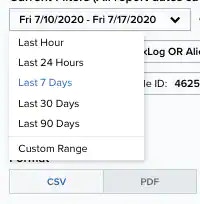 7. Select the **Format** of the report. It can either be **CSV** or **PDF**.
8. Select a **Schedule** for the report if you want to generate it again: **Daily**, **Weekly**, **Bi-weekly**, and **Monthly**. Otherwise, select **Never**.
9. Enter an email address in which to send the report. You may also select the **Send to my Email Address** option to add your email address automatically.
10. Select the **Enable link expiration** option.
This link is delivered by email and expires in 14 days.
11. Click **Next**.
12. In the **Report Name** field, enter a name for the report. This name will be displayed on the **Saved Reports** page.
13. **(OPTIONAL)** Enter a **Report Description**.
14. Under the **Number of Records** section, select the maximum number of records to include in the report: **20**, **50**, **100**, **500**, **1000**, or **2500**.
15. If you have previously chosen the **PDF** format, you will see the **Graphs** section, which you can use to include additional views. You can add to or remove graphs from the report by clicking the
7. Select the **Format** of the report. It can either be **CSV** or **PDF**.
8. Select a **Schedule** for the report if you want to generate it again: **Daily**, **Weekly**, **Bi-weekly**, and **Monthly**. Otherwise, select **Never**.
9. Enter an email address in which to send the report. You may also select the **Send to my Email Address** option to add your email address automatically.
10. Select the **Enable link expiration** option.
This link is delivered by email and expires in 14 days.
11. Click **Next**.
12. In the **Report Name** field, enter a name for the report. This name will be displayed on the **Saved Reports** page.
13. **(OPTIONAL)** Enter a **Report Description**.
14. Under the **Number of Records** section, select the maximum number of records to include in the report: **20**, **50**, **100**, **500**, **1000**, or **2500**.
15. If you have previously chosen the **PDF** format, you will see the **Graphs** section, which you can use to include additional views. You can add to or remove graphs from the report by clicking the  and
and  icons.
16. Click **Run** to run the report.
Click **Save & Run** if you wish to keep the report in your [Saved Reports on USM Anywhere](/documentation/usm-anywhere/user-guide/reports/saved-reports) page and receive the report in the indicated email.
icons.
16. Click **Run** to run the report.
Click **Save & Run** if you wish to keep the report in your [Saved Reports on USM Anywhere](/documentation/usm-anywhere/user-guide/reports/saved-reports) page and receive the report in the indicated email.