> ## Documentation Index
> Fetch the complete documentation index at: https://docs.levelblue.com/llms.txt
> Use this file to discover all available pages before exploring further.

# Tenable Sensor Deployment for VMware

**To deploy the Tenable sensor for VMware**

1. Go to **Data Sources > Blue Apps > Available BlueApps** tab.
2. Filter by **Scanner**, and then select **LevelBlue Vulnerability Scanner Powered by Tenable**.
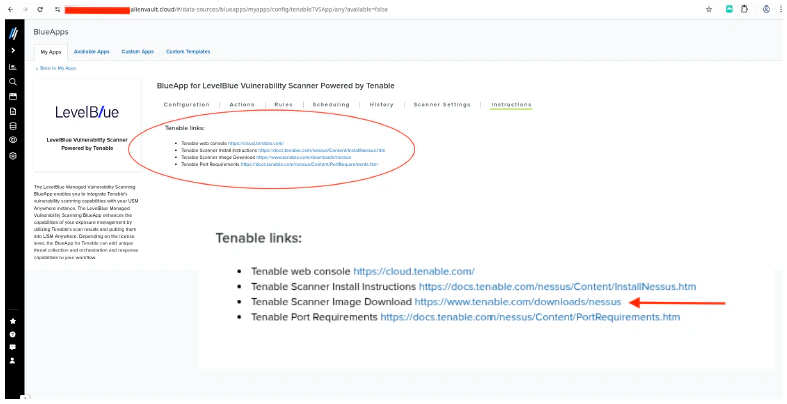
3. On the **My Apps** tab, click the **Tenable Scanner Image** link. This directs you to the [Tenable Nessus](https://www.tenable.com/downloads/nessus) page.
   <Frame>
     <img src="https://mintcdn.com/levelblue-5324744e/m89bevhI6tblGQax/images/usm-anywhere/HyperV_TenableLink.png?fit=max&auto=format&n=m89bevhI6tblGQax&q=85&s=bd914150091dc1936c8d05476c20fcd0" alt="Hyper V Tenable Link" width="787" height="404" data-path="images/usm-anywhere/HyperV_TenableLink.png" />
   </Frame>
4. Under **Download and Install Nessus**, expand the **Virtual Machines** section, and select the **View Tenable Core + Nessus Virtual Appliance** option.
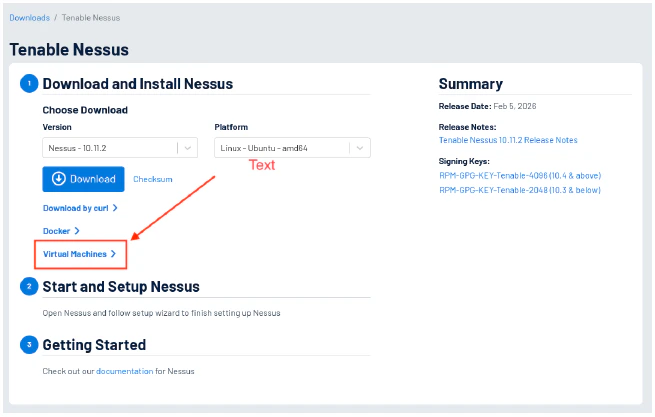
   <Frame>
     <img src="https://mintcdn.com/levelblue-5324744e/tubUKQ2fVKKngwCT/images/usm-anywhere/VMware_DLVM.png?fit=max&auto=format&n=tubUKQ2fVKKngwCT&q=85&s=82a266e3afaf1fbd07c6168b01525641" alt="V Mware DLVM" width="655" height="417" data-path="images/usm-anywhere/VMware_DLVM.png" />
   </Frame>
5. Download the OVA file for VMware (as shown on the screenshot below).
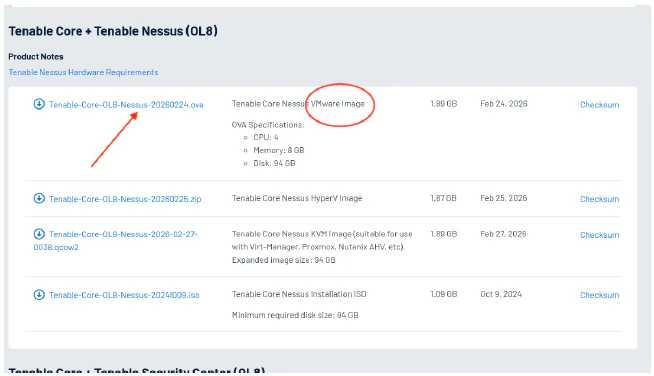
   <Frame>
     <img src="https://mintcdn.com/levelblue-5324744e/tubUKQ2fVKKngwCT/images/usm-anywhere/VMware_DLOVA.png?fit=max&auto=format&n=tubUKQ2fVKKngwCT&q=85&s=e84fe43e2d736f77fb19c99df8f1a208" alt="V Mware DLOVA" width="654" height="376" data-path="images/usm-anywhere/VMware_DLOVA.png" />
   </Frame>
6. Log into vSphere.
7. Click on the **Actions** menu, and select **Deploy OVF Template**.
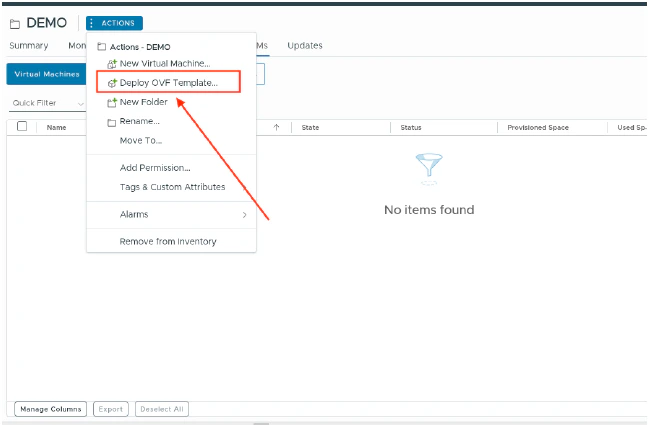
   <Frame>
     <img src="https://mintcdn.com/levelblue-5324744e/tubUKQ2fVKKngwCT/images/usm-anywhere/VMware_DeployOVF.png?fit=max&auto=format&n=tubUKQ2fVKKngwCT&q=85&s=242c1db23dd05a2f5e39d7c1014b0600" alt="V Mware Deploy OVF" width="652" height="425" data-path="images/usm-anywhere/VMware_DeployOVF.png" />
   </Frame>
8. Select **Local file** for the OVF template.
9. Click **Upload Files**, and then select the file you have downloaded earlier.
10. Once done, click **Next**.
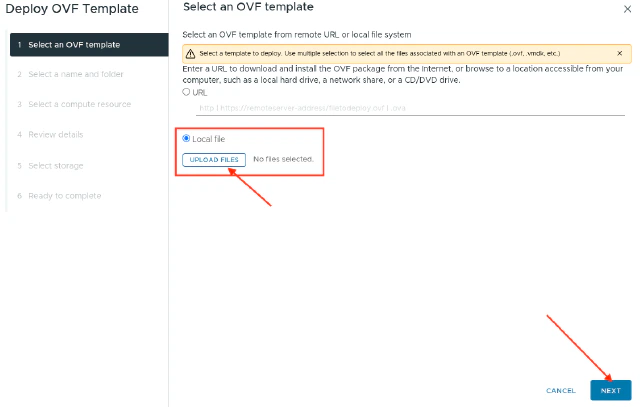
    <Frame>
      <img src="https://mintcdn.com/levelblue-5324744e/tubUKQ2fVKKngwCT/images/usm-anywhere/VMware_UploadFile.png?fit=max&auto=format&n=tubUKQ2fVKKngwCT&q=85&s=ec9df6423047f2bb9e142a0d45cb4d5a" alt="V Mware Upload File" width="642" height="407" data-path="images/usm-anywhere/VMware_UploadFile.png" />
    </Frame>
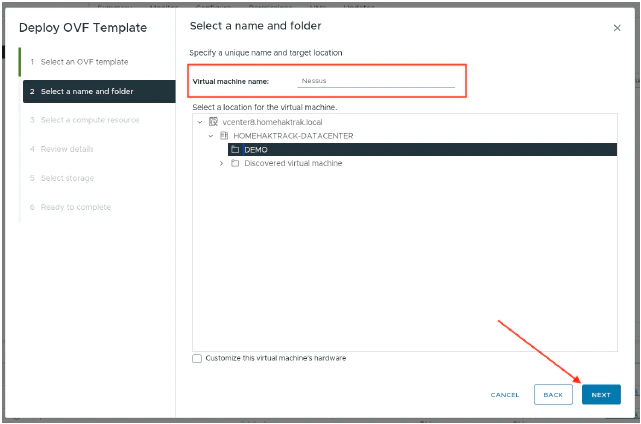
11. Specify a **Virtual machine name** for the sensor, and the **Location** of the VM. Then, click **Next**.
    <Frame>
      <img src="https://mintcdn.com/levelblue-5324744e/tubUKQ2fVKKngwCT/images/usm-anywhere/VMware_NameLoc.png?fit=max&auto=format&n=tubUKQ2fVKKngwCT&q=85&s=4365bae3efe59cbed65d0a32e0e535d8" alt="V Mware Name Loc" width="641" height="424" data-path="images/usm-anywhere/VMware_NameLoc.png" />
    </Frame>
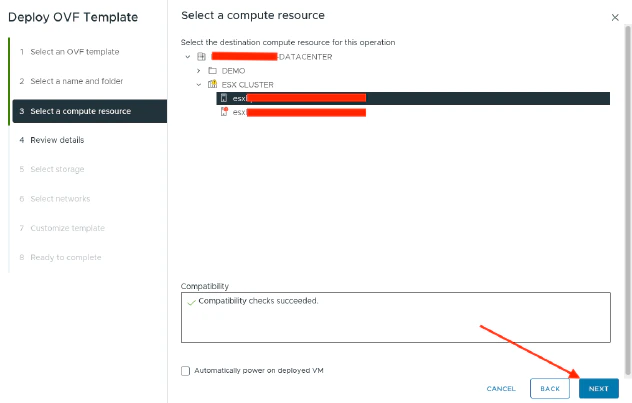
12. Select the **compute resource**, and then click **Next**.
    <Frame>
      <img src="https://mintcdn.com/levelblue-5324744e/tubUKQ2fVKKngwCT/images/usm-anywhere/VMware_Resource.png?fit=max&auto=format&n=tubUKQ2fVKKngwCT&q=85&s=3f4e3ad342b655f07f0bbb215b676d4d" alt="V Mware Resource" width="632" height="403" data-path="images/usm-anywhere/VMware_Resource.png" />
    </Frame>
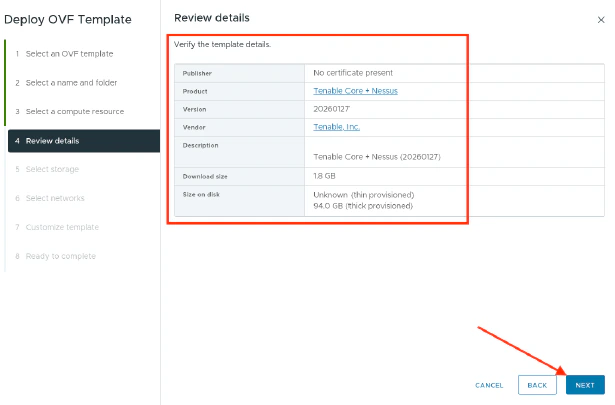
13. Review the deployment details, and then click **Next**.
    <Frame>
      <img src="https://mintcdn.com/levelblue-5324744e/tubUKQ2fVKKngwCT/images/usm-anywhere/VMware_RevDeploy.png?fit=max&auto=format&n=tubUKQ2fVKKngwCT&q=85&s=a2e5dea2092d219edef14ddce49720c0" alt="V Mware Rev Deploy" width="615" height="405" data-path="images/usm-anywhere/VMware_RevDeploy.png" />
    </Frame>
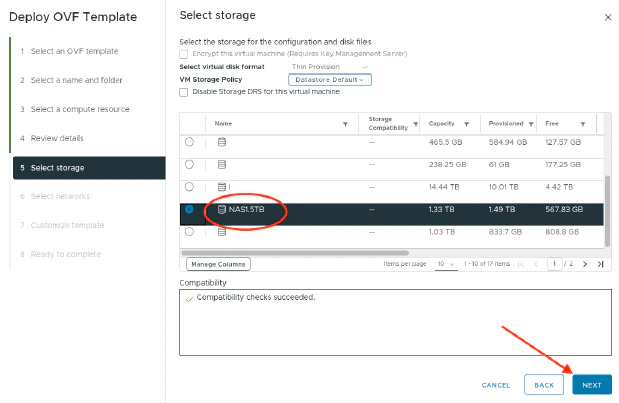
14. Select the **Storage** for the configuration and disk files, and then click **Next**.
    <Frame>
      <img src="https://mintcdn.com/levelblue-5324744e/tubUKQ2fVKKngwCT/images/usm-anywhere/VMware_Storage.png?fit=max&auto=format&n=tubUKQ2fVKKngwCT&q=85&s=4390837e9c33c2844e57bdaeabd4a907" alt="V Mware Storage" width="619" height="403" data-path="images/usm-anywhere/VMware_Storage.png" />
    </Frame>
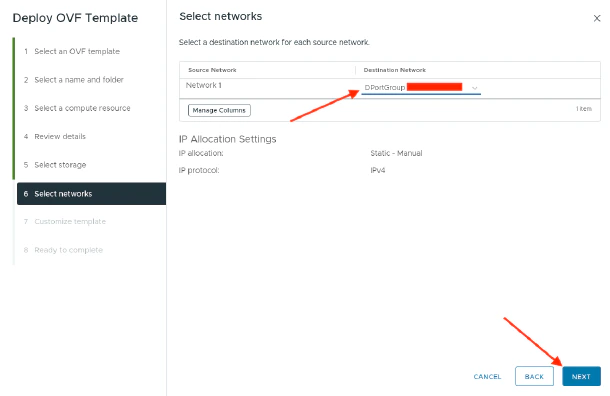
15. Select the **Destination Network** from the dropdown list, and then click **Next**.
    <Frame>
      <img src="https://mintcdn.com/levelblue-5324744e/tubUKQ2fVKKngwCT/images/usm-anywhere/VMware_Network.png?fit=max&auto=format&n=tubUKQ2fVKKngwCT&q=85&s=59d45b48921857a2d8b763f6562bf660" alt="V Mware Network" width="610" height="396" data-path="images/usm-anywhere/VMware_Network.png" />
    </Frame>
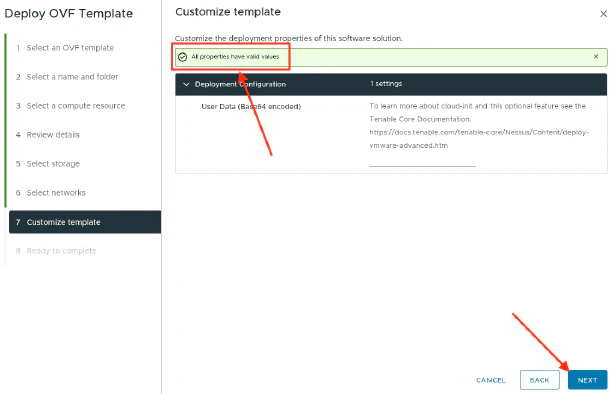
    The template properties are validated. If everything is valid, a confirmation message appears on the page.
16. Click **Next**.
    <Frame>
      <img src="https://mintcdn.com/levelblue-5324744e/tubUKQ2fVKKngwCT/images/usm-anywhere/VMware_ValidValues.png?fit=max&auto=format&n=tubUKQ2fVKKngwCT&q=85&s=6d408dafe5456333b44037ef05d7ec3b" alt="V Mware Valid Values" width="611" height="394" data-path="images/usm-anywhere/VMware_ValidValues.png" />
    </Frame>
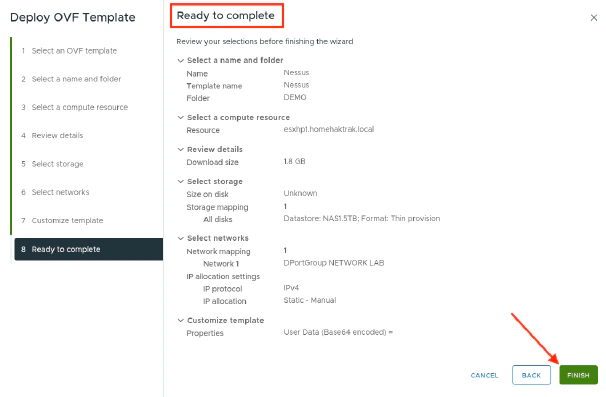
17. Review the deployment details, and then click **Finish**.
    <Frame>
      <img src="https://mintcdn.com/levelblue-5324744e/tubUKQ2fVKKngwCT/images/usm-anywhere/VMware_DeployVM.png?fit=max&auto=format&n=tubUKQ2fVKKngwCT&q=85&s=95e24f026d18f535ed248966343f3d73" alt="V Mware Deploy VM" width="606" height="397" data-path="images/usm-anywhere/VMware_DeployVM.png" />
    </Frame>
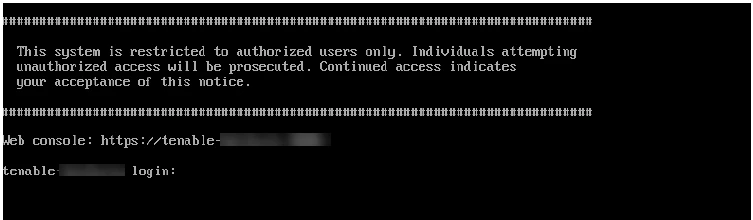
18. Start the Tenable Nessus VM.
    <Frame>
      <img src="https://mintcdn.com/levelblue-5324744e/YkIdbcABeK3EmZmy/images/usm-anywhere/HyperV_WebConsole.png?fit=max&auto=format&n=YkIdbcABeK3EmZmy&q=85&s=1d3d3a23216e5504d10e390d3b7b1c99" alt="Hyper V Web Console" width="753" height="220" data-path="images/usm-anywhere/HyperV_WebConsole.png" />
    </Frame>
19. Log into the Tenable sensor web console using the default credentials: **username**: wizard / **password**: admin

    <Frame>
      <img src="https://mintcdn.com/levelblue-5324744e/YkIdbcABeK3EmZmy/images/usm-anywhere/HyperV_ConsoleLogin.png?fit=max&auto=format&n=YkIdbcABeK3EmZmy&q=85&s=afa46926438e1254e91d512bf63e52f2" alt="Hyper V Console Login" width="713" height="205" data-path="images/usm-anywhere/HyperV_ConsoleLogin.png" />
    </Frame>

    <Note>
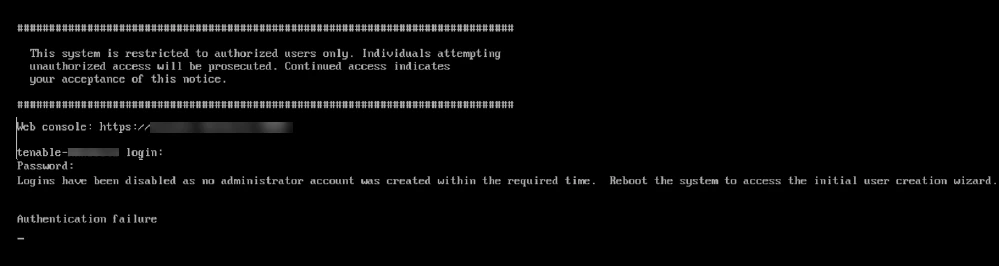
      Reboot the sensor if you cannot log in and the following error appears: *"Logins have been disabled as no administrator account was created within the required time. Reboot the system to access the initial user creation wizard."*
      <Frame>
        <img src="https://mintcdn.com/levelblue-5324744e/YkIdbcABeK3EmZmy/images/usm-anywhere/HyperV_ConsoleReboot.png?fit=max&auto=format&n=YkIdbcABeK3EmZmy&q=85&s=8bcdf6c1cd6dc196dacfb69a3818a033" alt="Hyper V Console Reboot" width="999" height="266" data-path="images/usm-anywhere/HyperV_ConsoleReboot.png" />
      </Frame>
    </Note>
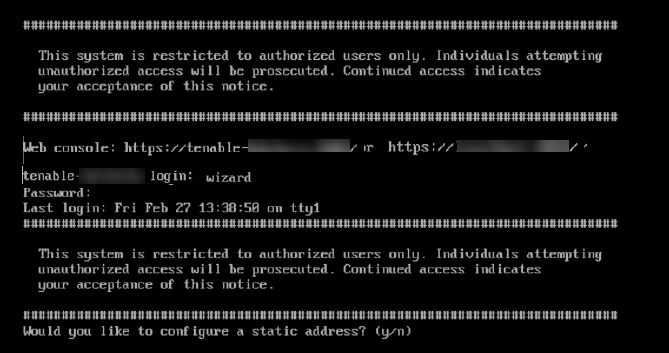
20. When prompted to configure a Tenable sensor IP (**static address**), type **y**.
    <Frame>
      <img src="https://mintcdn.com/levelblue-5324744e/YkIdbcABeK3EmZmy/images/usm-anywhere/HyperV_ConsoleIPConfig.png?fit=max&auto=format&n=YkIdbcABeK3EmZmy&q=85&s=05a1125ebc9e538c0f325f0a5dd3c598" alt="Hyper V Console IP Config" width="669" height="353" data-path="images/usm-anywhere/HyperV_ConsoleIPConfig.png" />
    </Frame>
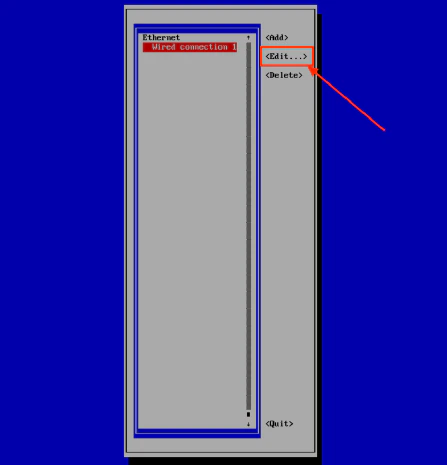
21. Select the **Wired connection** option, and then click **Edit**.
    <Frame>
      <img src="https://mintcdn.com/levelblue-5324744e/tubUKQ2fVKKngwCT/images/usm-anywhere/VMware_EthernetConnect.png?fit=max&auto=format&n=tubUKQ2fVKKngwCT&q=85&s=283d997f51f7e7557905f3f6bbe1d83a" alt="V Mware Ethernet Connect" title="V Mware Ethernet Connect" className="mx-auto" style={{ width:"83%" }} width="447" height="465" data-path="images/usm-anywhere/VMware_EthernetConnect.png" />
    </Frame>
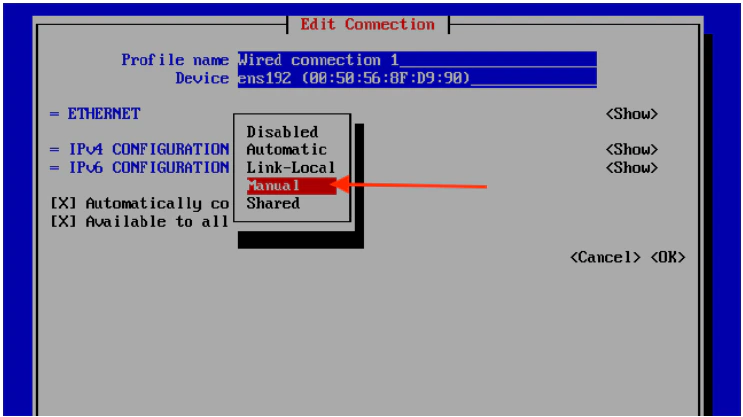
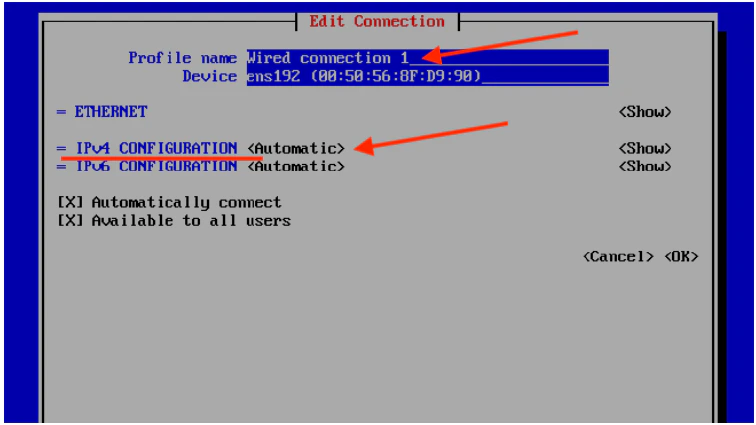
22. Go to the IPv4 configuration, and change the Automatic option to **Manual**.
    <Frame>
      <img src="https://mintcdn.com/levelblue-5324744e/tubUKQ2fVKKngwCT/images/usm-anywhere/VMware_IPv4Auto.png?fit=max&auto=format&n=tubUKQ2fVKKngwCT&q=85&s=4db136f3f45bc74687da9f9d90740865" alt="V Mware I Pv4auto" width="756" height="425" data-path="images/usm-anywhere/VMware_IPv4Auto.png" />
    </Frame>
    <Frame>
      <img src="https://mintcdn.com/levelblue-5324744e/tubUKQ2fVKKngwCT/images/usm-anywhere/VMware_Manual.png?fit=max&auto=format&n=tubUKQ2fVKKngwCT&q=85&s=94eaa4a2823445b0f472342850d42fd8" alt="V Mware Manual" width="743" height="417" data-path="images/usm-anywhere/VMware_Manual.png" />
    </Frame>
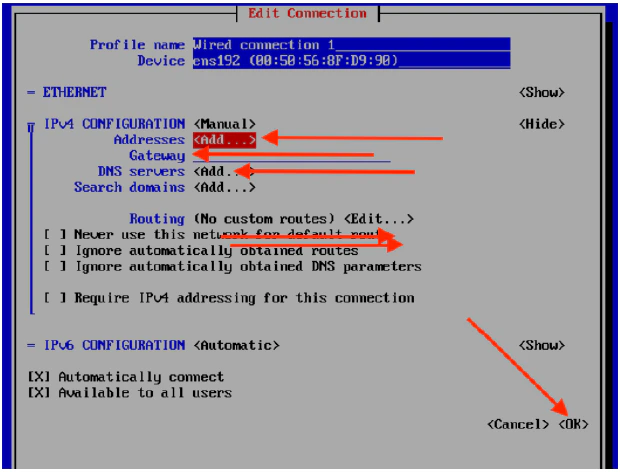
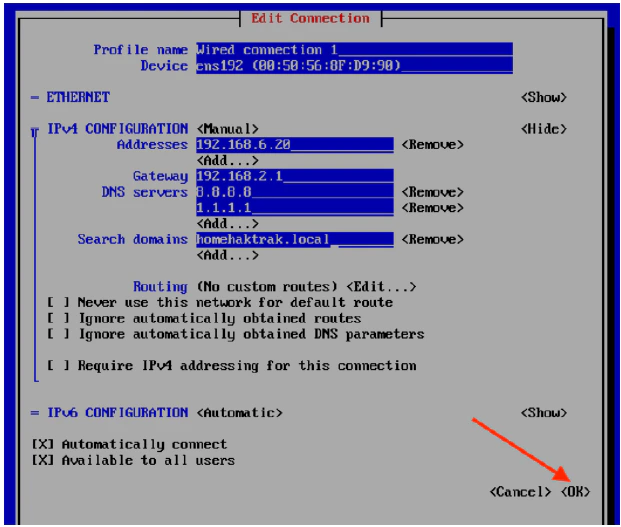
23. Assign the **IP Address**, **Gateway**, and **DNS Servers**.
24. Once done, click **OK**.
    <Frame>
      <img src="https://mintcdn.com/levelblue-5324744e/tubUKQ2fVKKngwCT/images/usm-anywhere/VMware_AssignIP.png?fit=max&auto=format&n=tubUKQ2fVKKngwCT&q=85&s=236a95d7e61d6a412bb1ee49ac405e23" alt="V Mware Assign IP" width="620" height="472" data-path="images/usm-anywhere/VMware_AssignIP.png" />
    </Frame>
25. Verify all of the data, and then click **OK**.
    <Frame>
      <img src="https://mintcdn.com/levelblue-5324744e/tubUKQ2fVKKngwCT/images/usm-anywhere/VMware_CheckData.png?fit=max&auto=format&n=tubUKQ2fVKKngwCT&q=85&s=53645c70e7e9da0d85cc4136264dd05a" alt="V Mware Check Data" width="621" height="527" data-path="images/usm-anywhere/VMware_CheckData.png" />
    </Frame>
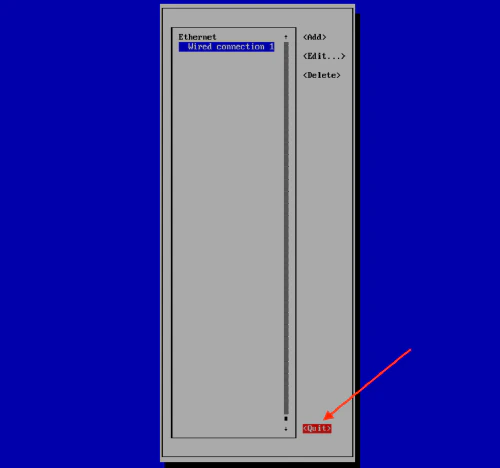
26. Click **Quit**.
    <Frame>
      <img src="https://mintcdn.com/levelblue-5324744e/tubUKQ2fVKKngwCT/images/usm-anywhere/VMware_Quit.png?fit=max&auto=format&n=tubUKQ2fVKKngwCT&q=85&s=2a24610d2bb4ccee5a9bbb67e6dcd784" alt="V Mware Quit" title="V Mware Quit" className="mx-auto" style={{ width:"86%" }} width="500" height="468" data-path="images/usm-anywhere/VMware_Quit.png" />
    </Frame>
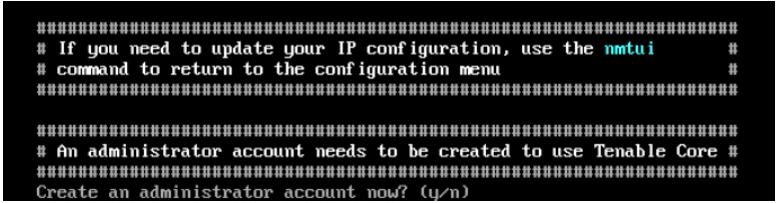
27. Return to the web console, and when prompted to create an **administrator account**, type **y**.
    <Frame>
      <img src="https://mintcdn.com/levelblue-5324744e/YkIdbcABeK3EmZmy/images/usm-anywhere/HyperV_CreateAdminAcct.png?fit=max&auto=format&n=YkIdbcABeK3EmZmy&q=85&s=579b8057217dca6f64bcdb38fa7eb1ac" alt="Hyper V Create Admin Acct" width="777" height="203" data-path="images/usm-anywhere/HyperV_CreateAdminAcct.png" />
    </Frame>
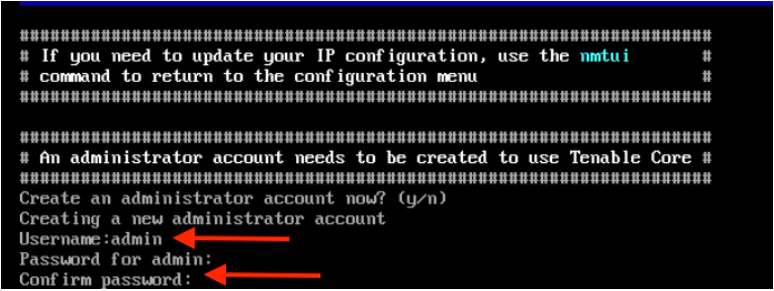
28. Type a **Username** and **Password** for the admin account.
29. Confirm the password.
    <Frame>
      <img src="https://mintcdn.com/levelblue-5324744e/YkIdbcABeK3EmZmy/images/usm-anywhere/HyperV_AdminLogin.png?fit=max&auto=format&n=YkIdbcABeK3EmZmy&q=85&s=ab52cfdd992b12f0f0f35a633ae673fe" alt="Hyper V Admin Login" width="774" height="291" data-path="images/usm-anywhere/HyperV_AdminLogin.png" />
    </Frame>
30. Check that the new admin account can log into the Tenable web console.
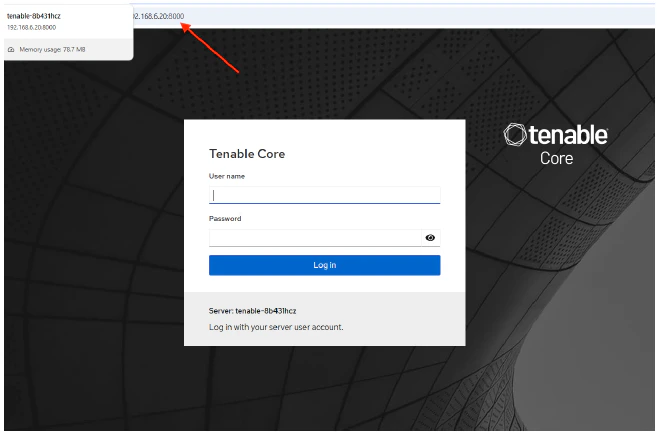
31. Using the configured IP, use your web browser to connect to Tenable sensor to port 8000.
32. Log in using the admin account credentials.
    <Frame>
      <img src="https://mintcdn.com/levelblue-5324744e/tubUKQ2fVKKngwCT/images/usm-anywhere/VMware_TenableCoreLogin.png?fit=max&auto=format&n=tubUKQ2fVKKngwCT&q=85&s=ee2bf95539f2040d1b5be4b8394a7e72" alt="V Mware Tenable Core Login" width="657" height="433" data-path="images/usm-anywhere/VMware_TenableCoreLogin.png" />
    </Frame>
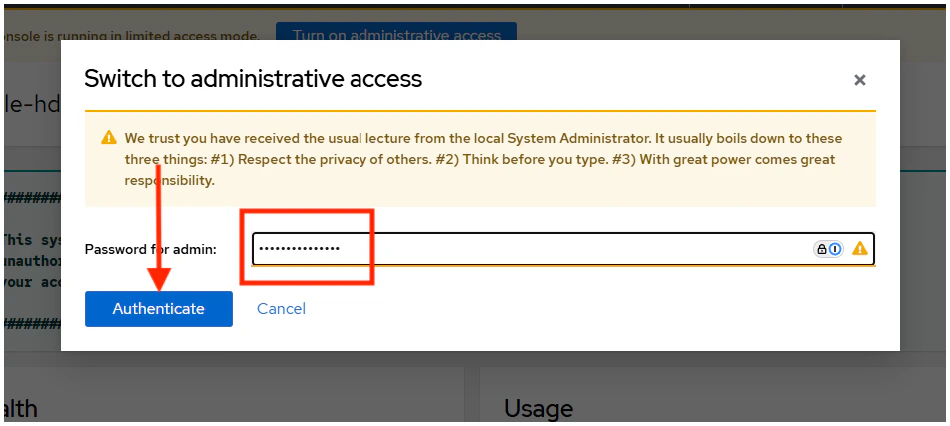
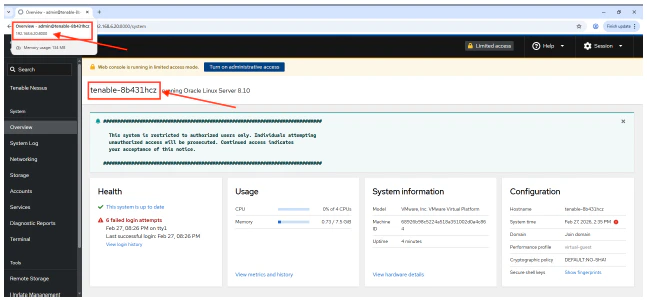
33. Once you are logged in, you can see the name of the Tenable Sensor. Click **Turn on administrative access**.
    <Frame>
      <img src="https://mintcdn.com/levelblue-5324744e/tubUKQ2fVKKngwCT/images/usm-anywhere/VMware_TenableDashboard.png?fit=max&auto=format&n=tubUKQ2fVKKngwCT&q=85&s=15da0feac4181316d30f7bca2dc9e7b3" alt="V Mware Tenable Dashboard" width="647" height="300" data-path="images/usm-anywhere/VMware_TenableDashboard.png" />
    </Frame>
34. Click **Authenticate**.
    <Frame>
      <img src="https://mintcdn.com/levelblue-5324744e/YkIdbcABeK3EmZmy/images/usm-anywhere/HyperV_AuthenticateAdmin.png?fit=max&auto=format&n=YkIdbcABeK3EmZmy&q=85&s=bac3158e1ece2b19b4c0579cbb0f250a" alt="Hyper V Authenticate Admin" width="950" height="426" data-path="images/usm-anywhere/HyperV_AuthenticateAdmin.png" />
    </Frame>
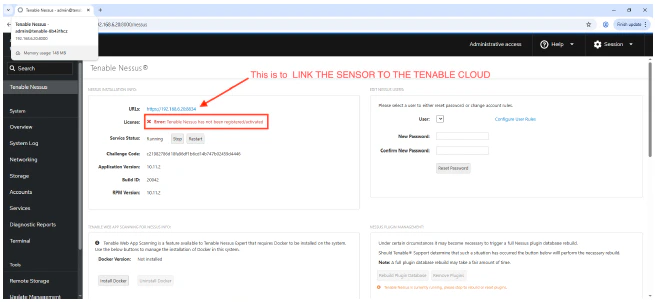
35. Check the **License** of the sensor, and verify that there is no license linking the sensor to the cloud tenant.
    <Frame>
      <img src="https://mintcdn.com/levelblue-5324744e/tubUKQ2fVKKngwCT/images/usm-anywhere/VMware_TenableLicense.png?fit=max&auto=format&n=tubUKQ2fVKKngwCT&q=85&s=acf143ce259d5de61e8dcb7685ddaeee" alt="V Mware Tenable License" width="655" height="302" data-path="images/usm-anywhere/VMware_TenableLicense.png" />
    </Frame>
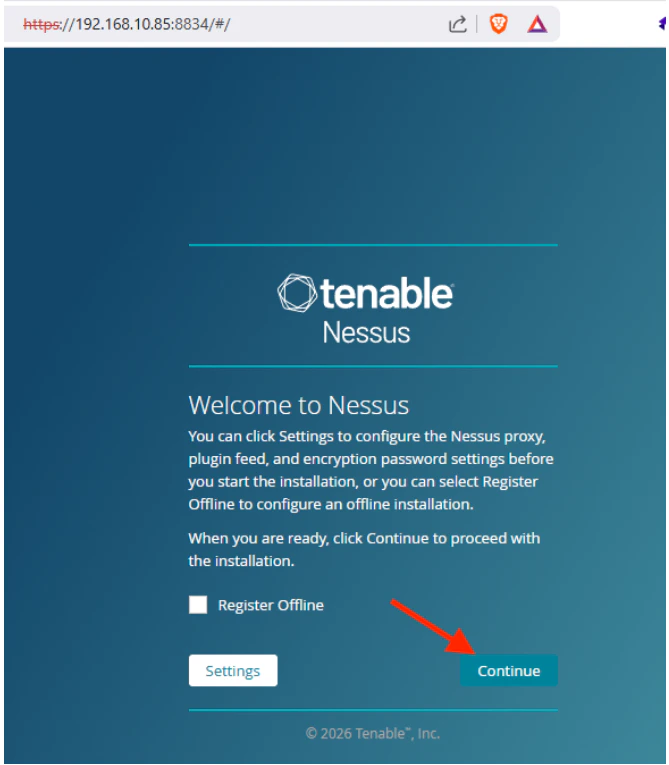
36. Connect to the Tenable sensor using your web browser on port 8834, and then click **Continue**.
    <Frame>
      <img src="https://mintcdn.com/levelblue-5324744e/YkIdbcABeK3EmZmy/images/usm-anywhere/HyperV_TenableLogin.png?fit=max&auto=format&n=YkIdbcABeK3EmZmy&q=85&s=bbafc74f47534e7864dc67bd8b68ce49" alt="Hyper V Tenable Login" className="mx-auto" style={{ width:"80%" }} width="669" height="765" data-path="images/usm-anywhere/HyperV_TenableLogin.png" />
    </Frame>
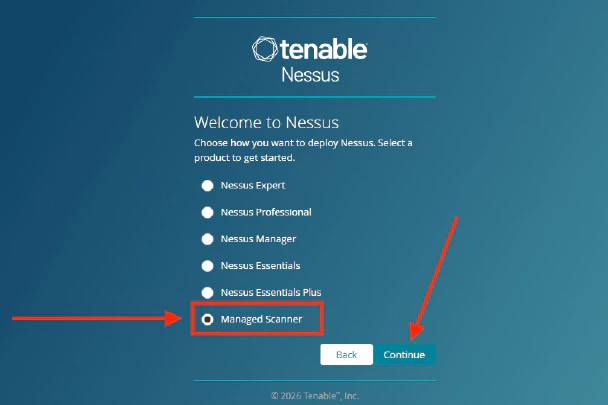
37. Select the **Managed Sensor** option, and then click **Continue**.
    <Frame>
      <img src="https://mintcdn.com/levelblue-5324744e/tubUKQ2fVKKngwCT/images/usm-anywhere/VMware_ManagedScanner.png?fit=max&auto=format&n=tubUKQ2fVKKngwCT&q=85&s=a4e0f0039aada9059ec9339a0900d1ce" alt="V Mware Managed Scanner" className="mx-auto" style={{ width:"92%" }} width="608" height="405" data-path="images/usm-anywhere/VMware_ManagedScanner.png" />
    </Frame>
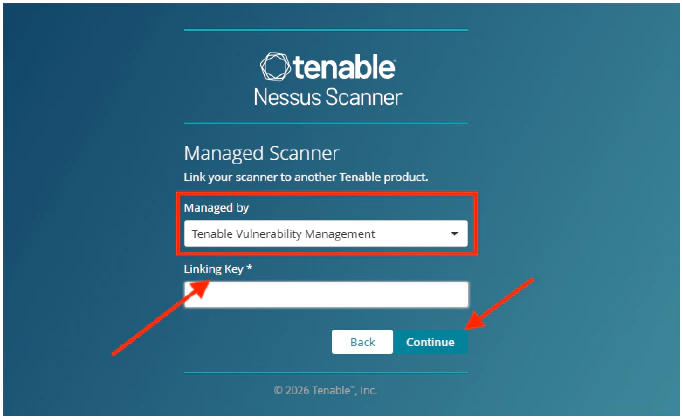
38. Select the **Tenable Vulnerability Management** option to manage your linked scanner.
39. Enter the **Linking Key**. (See **Obtain Linking Key** section below for details.)
    <Frame>
      <img src="https://mintcdn.com/levelblue-5324744e/YkIdbcABeK3EmZmy/images/usm-anywhere/HyperV_ManagedScanner.png?fit=max&auto=format&n=YkIdbcABeK3EmZmy&q=85&s=f33955887d9e6198d68df8314d2b9dc8" alt="Hyper V Managed Scanner" className="mx-auto" style={{ width:"85%" }} width="682" height="419" data-path="images/usm-anywhere/HyperV_ManagedScanner.png" />
    </Frame>

    <br />

    <Accordion title="Obtain Linking Key">
      You may get the Linking Key from Tenable cloud:

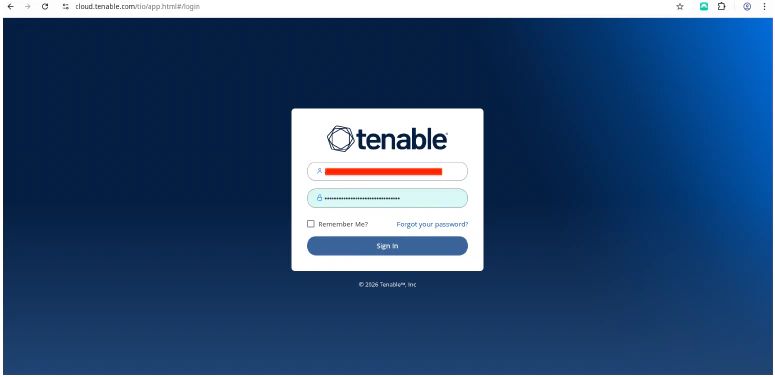
      * Log into [cloud.tenable.com](http://cloud.tenable.com) 
          <Frame>
            <img src="https://mintcdn.com/levelblue-5324744e/rZYqRuu8SvxP90bm/images/usm-anywhere/GCP_TenableCloud.png?fit=max&auto=format&n=rZYqRuu8SvxP90bm&q=85&s=d38dfed116ebc3dd0e6f9a643c4ab52d" alt="GCP Tenable Cloud" title="GCP Tenable Cloud" className="mx-auto" style={{ width:"83%" }} width="775" height="377" data-path="images/usm-anywhere/GCP_TenableCloud.png" />
          </Frame>
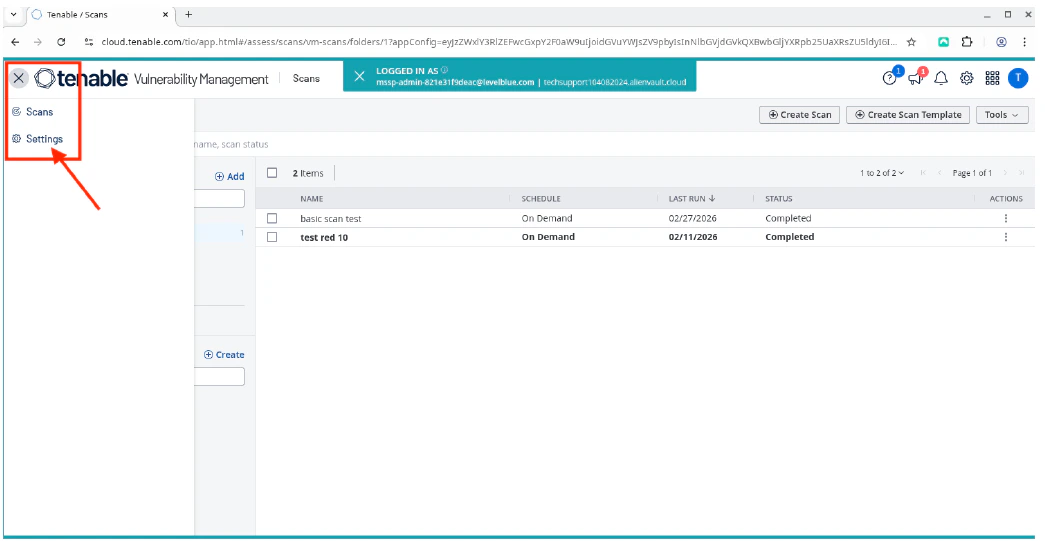
      * Click the burger menu, and then select **Settings**.

          <Frame>
            <img src="https://mintcdn.com/levelblue-5324744e/gU7T8wrJm1xDJZ8S/images/usm-anywhere/Azure_burgermenu.png?fit=max&auto=format&n=gU7T8wrJm1xDJZ8S&q=85&s=26b9f8983c6f70e606e1387cc672f917" alt="Azure Burgermenu" width="777" height="153" data-path="images/usm-anywhere/Azure_burgermenu.png" />
          </Frame>
          <Frame>
            <img src="https://mintcdn.com/levelblue-5324744e/YkIdbcABeK3EmZmy/images/usm-anywhere/HyperV_TenableCloud.png?fit=max&auto=format&n=YkIdbcABeK3EmZmy&q=85&s=2330448bc7bd75e3377aff6097bb42a5" alt="Hyper V Tenable Cloud" title="Hyper V Tenable Cloud" className="mx-auto" style={{ width:"83%" }} width="1045" height="541" data-path="images/usm-anywhere/HyperV_TenableCloud.png" />
          </Frame>
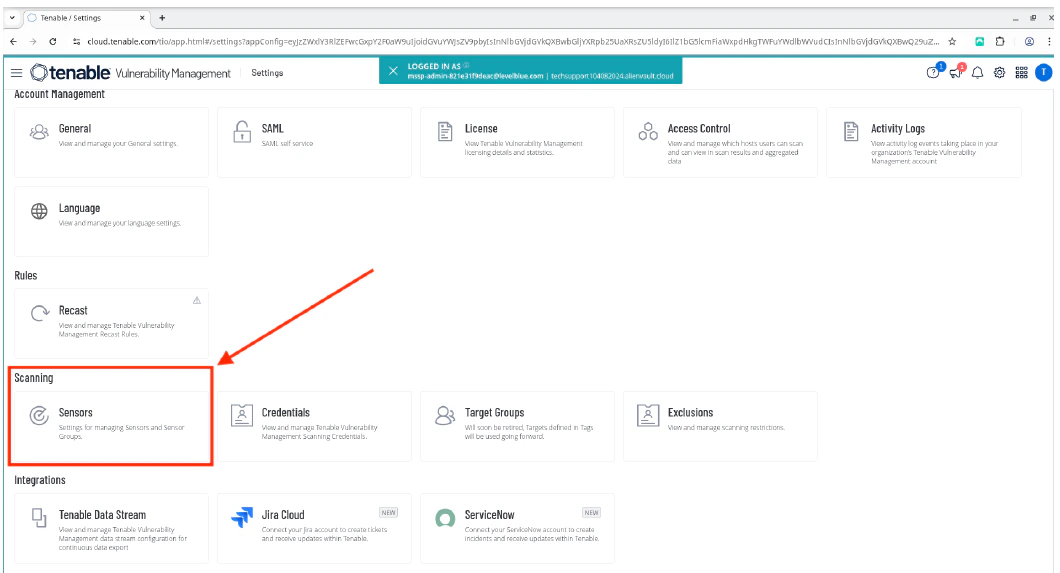
      * Select **Sensors**.
          <Frame>
            <img src="https://mintcdn.com/levelblue-5324744e/YkIdbcABeK3EmZmy/images/usm-anywhere/HyperV_TenableCloudSensors.png?fit=max&auto=format&n=YkIdbcABeK3EmZmy&q=85&s=21fb00910c942f497f8912ccd4e34195" alt="Hyper V Tenable Cloud Sensors" title="Hyper V Tenable Cloud Sensors" className="mx-auto" style={{ width:"87%" }} width="1060" height="573" data-path="images/usm-anywhere/HyperV_TenableCloudSensors.png" />
          </Frame>
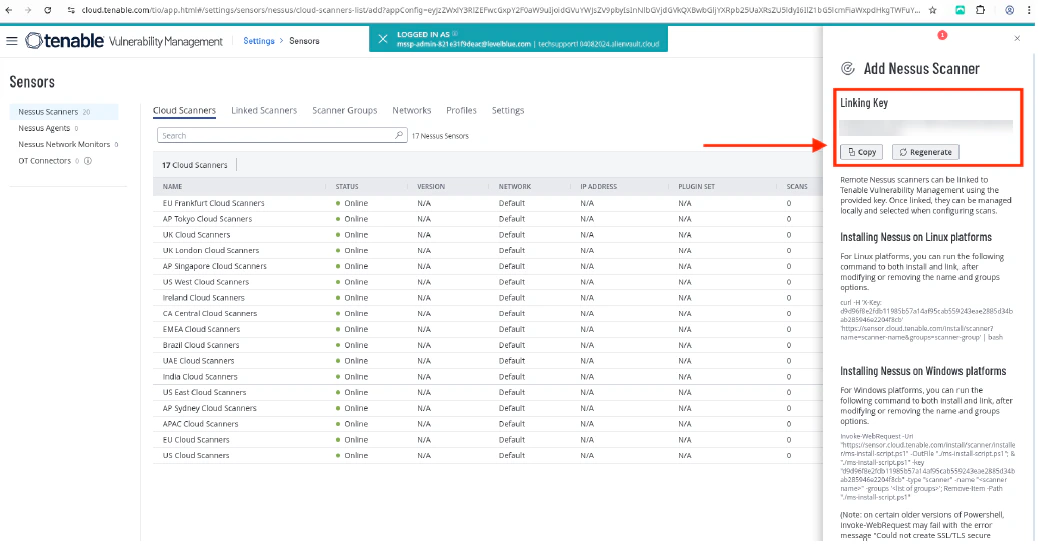
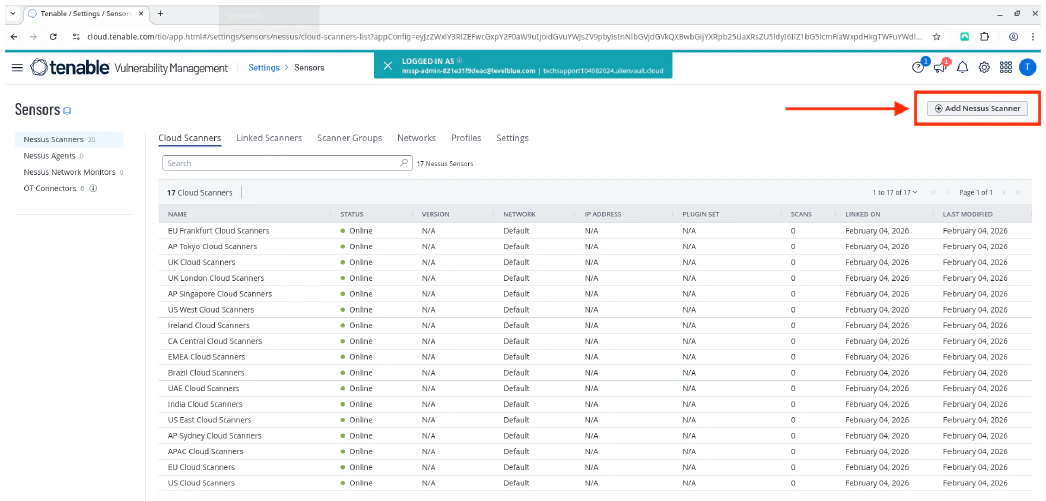
      * Click **Add Nessus Scanner** to view the Linking Key.
          <Frame>
            <img src="https://mintcdn.com/levelblue-5324744e/YkIdbcABeK3EmZmy/images/usm-anywhere/HyperV_AddNessusScanner.png?fit=max&auto=format&n=YkIdbcABeK3EmZmy&q=85&s=09386c25a7d3dbd75e1312cc6c001ba3" alt="Hyper V Add Nessus Scanner" title="Hyper V Add Nessus Scanner" className="mx-auto" style={{ width:"90%" }} width="1046" height="501" data-path="images/usm-anywhere/HyperV_AddNessusScanner.png" />
          </Frame>
      * Copy the **Linking Key**.
          <Frame>
            <img src="https://mintcdn.com/levelblue-5324744e/tubUKQ2fVKKngwCT/images/usm-anywhere/HyperV_CopyLinkingKey1.png?fit=max&auto=format&n=tubUKQ2fVKKngwCT&q=85&s=0d268f117316f4d33b84e0c60680ac56" alt="Hyper V Copy Linking Key1" title="Hyper V Copy Linking Key1" className="mx-auto" style={{ width:"93%" }} width="1038" height="547" data-path="images/usm-anywhere/HyperV_CopyLinkingKey1.png" />
          </Frame>
    </Accordion>
40. Once you have entered the Linking Key, click **Continue**.
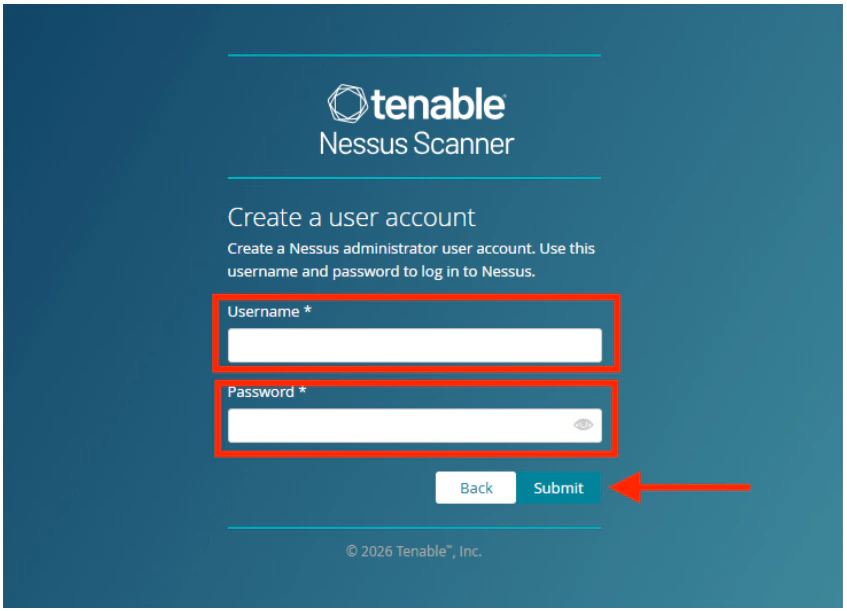
41. Enter a **Username** and **Password** to create a Nessus administrator user account.
    <Frame>
      <img src="https://mintcdn.com/levelblue-5324744e/YkIdbcABeK3EmZmy/images/usm-anywhere/HyperV_NessusUserAcct.png?fit=max&auto=format&n=YkIdbcABeK3EmZmy&q=85&s=baf54d50b079006b1bec52cc31050f66" alt="Hyper V Nessus User Acct" className="mx-auto" style={{ width:"83%" }} width="847" height="611" data-path="images/usm-anywhere/HyperV_NessusUserAcct.png" />
    </Frame>
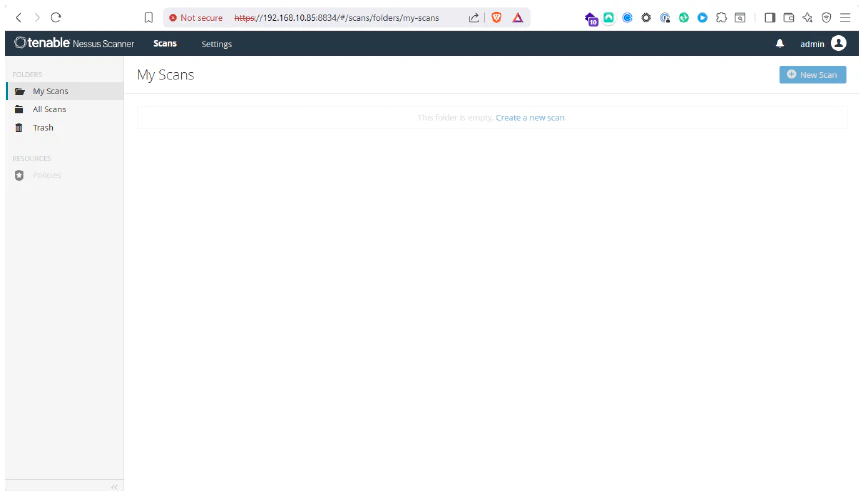
42. Click **Submit**. The sensor's **My Scans** page opens.
    <Frame>
      <img src="https://mintcdn.com/levelblue-5324744e/YkIdbcABeK3EmZmy/images/usm-anywhere/HyperV_MyScans.png?fit=max&auto=format&n=YkIdbcABeK3EmZmy&q=85&s=19c7452c45def8d4f6a9f9d07ffe0c7e" alt="Hyper V My Scans" width="862" height="500" data-path="images/usm-anywhere/HyperV_MyScans.png" />
    </Frame>
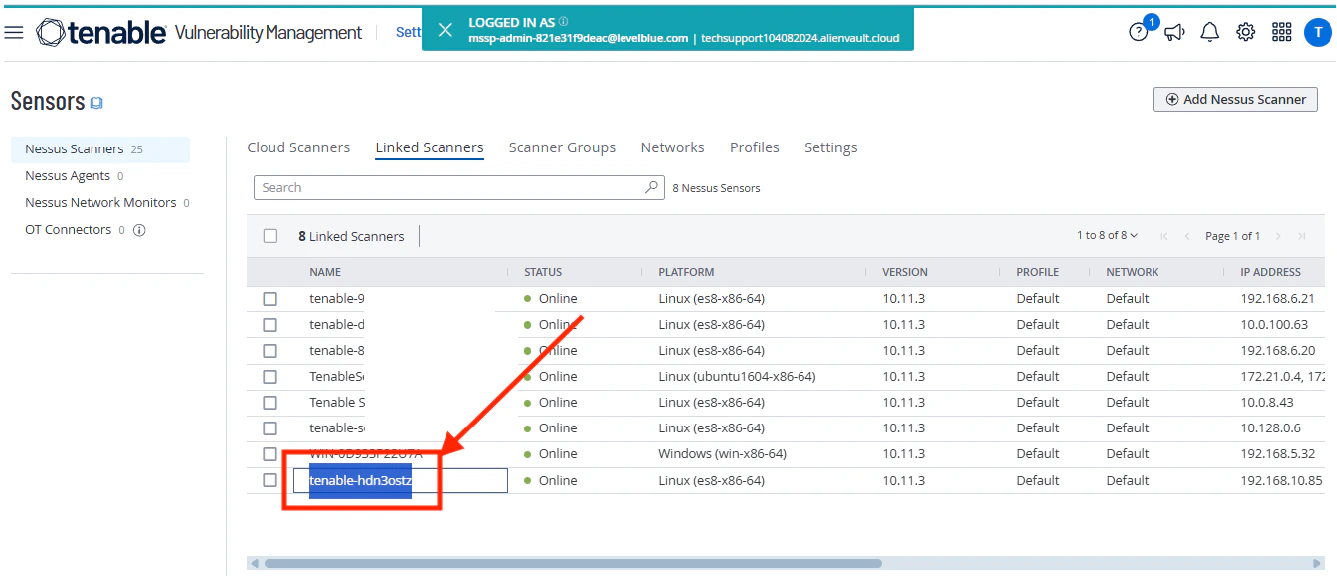
43. Return to the Tenable cloud page, and verify that the Tenable sensor is linked correctly and is in **Online** status.
    <Frame>
      <img src="https://mintcdn.com/levelblue-5324744e/YkIdbcABeK3EmZmy/images/usm-anywhere/HyperV_TenabledLinkedSensor.png?fit=max&auto=format&n=YkIdbcABeK3EmZmy&q=85&s=f74a9fe3e8bf2a5487f92889a056f2cf" alt="Hyper V Tenabled Linked Sensor" width="1337" height="576" data-path="images/usm-anywhere/HyperV_TenabledLinkedSensor.png" />
    </Frame>

<Warning>
  **VERIFICATION / TROUBLESHOOTING**

  * If the sensor does not link properly:
    * Re-check the outbound TCP 443 access to [sensor.cloud.tenable.com](http://sensor.cloud.tenable.com) and [plugins.nessus.org](http://plugins.nessus.org).
    * Make sure the Linking Key is correct and not expired.
  * If the scans do not find hosts:
    * Confirm that the scanner can reach the target network (routing, security groups/NSGs, and target host firewalls).
    * For credential scans, confirm that the credentials work and the required auth ports are reachable.
</Warning>